Menopause and Bone Health: Why Your Skeleton Needs Attention After 50
Bone loss speeds up dramatically in the years around menopause. Most women have no idea it is happening. Here is what you need to know, and what you can do about it.
Bone is living tissue. It is constantly being broken down and built back up, in a process called remodelling. This process keeps bones strong and repairs small damage throughout life. A hormone called oestrogen plays a key role in this process. It helps balance bone breakdown and bone building. When oestrogen levels fall at menopause, this balance shifts: bone breakdown speeds up while bone building slows down. The result is a net loss in bone density.
In the first five to seven years after menopause, women can lose between 10 and 20% of their bone density. This is the fastest rate of bone loss at any point in adult life. After this initial rapid phase, loss continues more slowly, but it does not stop.
What osteoporosis is and why it matters
Osteoporosis is the medical name for bones that have become weak and fragile (low bone density), making them more likely to break. It has no symptoms. There is no pain, no visible change, and no warning sign. Many women only find out they have osteoporosis after they break a bone. By that point, significant bone loss has already happened.
In the UK, one in two women over 50 will break a bone because of osteoporosis. Breaks in the hip (hip fractures) are the most serious. They often lead to a serious loss of independence. Around 20 to 30% of people who break a hip die within a year. Breaks in the spine (vertebral fractures) can cause height loss, back pain, and changes in posture. Breaks in the wrist are often the first to happen and can be an early sign that your bone density needs attention.
Osteoporosis is not inevitable. Its causes and risk factors are well understood, and many of them can be changed. With the right approach, its progress can be significantly slowed.
Why menopause is the critical window
Bone loss happens fast in the early years after menopause. This means that action taken during this window has an especially large effect on your long-term bone health. Two things largely decide your fracture risk in later decades: how much bone density you have at the point of menopause, and how quickly you lose it during this rapid phase.
Women who enter menopause with higher bone density have more reserve to draw on. This higher starting point is usually built through years of weight-bearing exercise, enough calcium and vitamin D, and healthy lifestyle habits. Women who enter menopause with already-low bone density face a much higher risk of reaching the osteoporosis threshold during this rapid loss phase.
This is one reason why bone health matters before menopause too, not just after it. Building and maintaining bone density in your thirties and forties, before the menopause transition begins, is one of the most impactful things you can do for your long-term skeletal health.
What protects bone health
- Calcium is the main mineral that gives bone its structure, and getting enough of it is essential for keeping bones strong. Adults in the UK are recommended to get 700mg of calcium a day. Postmenopausal women may benefit from intakes toward the higher end of that range. The best food sources include dairy products, fortified plant milks, tinned fish eaten with the bones (such as sardines and salmon), dark leafy greens such as kale and broccoli, and almonds. Calcium from food is generally absorbed better than calcium from supplements and is the preferred way to get it.
- Vitamin D helps your body absorb calcium from food in the gut. Without enough vitamin D, your body only absorbs around 10 to 15% of the calcium you eat. In the UK, sunlight is not strong enough for your body to make vitamin D between October and March. Because of this, the NHS recommends that everyone takes a daily supplement of 10 micrograms (400 IU) throughout autumn and winter. Older adults, and people at higher risk of deficiency, are advised to take this supplement all year round.
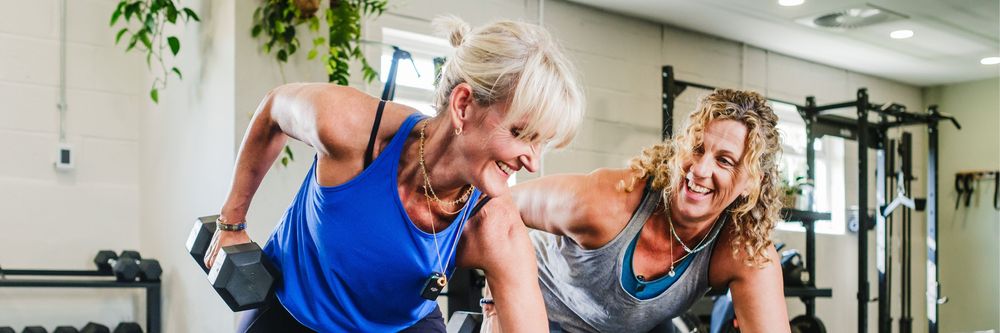
- Weight-bearing exercise is one of the strongest signals that tells your body to build bone (bone remodelling). Weight-bearing activities include walking, dancing, low-impact aerobics, and resistance training. The physical load these activities place on your bones slows down the rate of bone density loss. Resistance training in particular, which puts muscular force on your bones, is especially effective for maintaining bone density. It is strongly recommended for women going through perimenopause and after menopause.
- Avoiding smoking is important for bone health. Smoking reduces how much calcium your body absorbs, lowers oestrogen levels even before menopause, and is linked to lower bone density and a higher risk of fracture.
- Moderating alcohol also matters for bone health. Drinking heavily interferes with calcium absorption and with the way your body processes bone (bone metabolism).
When to consider bone density testing
A DEXA scan is the standard test for measuring bone density (a low-dose X-ray scan called dual-energy X-ray absorptiometry). It is available through a GP referral. The scan is painless, takes around 10 to 20 minutes, and involves very low levels of radiation.
Whether you should have a DEXA scan depends on your individual risk factors. A GP can use a tool called FRAX to help guide this decision. FRAX estimates your chance of breaking a bone over the next ten years, based on your age, bone density, lifestyle, and medical history.
If you are postmenopausal and have risk factors for osteoporosis, such as a family history of hip fracture, a history of smoking, low body weight, or long-term steroid use, it is worth discussing bone density testing with your GP.
This article is for general health information purposes and does not constitute medical advice. If you have concerns about your bone health, please speak with a healthcare professional.

Anna Jones
Chief Nursing Officer, Bluecrest
Graham Jones
Medical Writer