How Can You Tell If Your Heart Is Healthy?
The clearest signs of a healthy heart are steady energy, easy breathing during moderate exercise, a resting heart rate of roughly 60–100 beats per minute and blood pressure in a normal range.
But not everyone with a heart condition notices symptoms, so the most reliable way to know is a heart health check. Many things shape your heart health, including diet, smoking, activity levels and stress. A quick test can either put your mind at rest or be the nudge that starts a healthier routine.
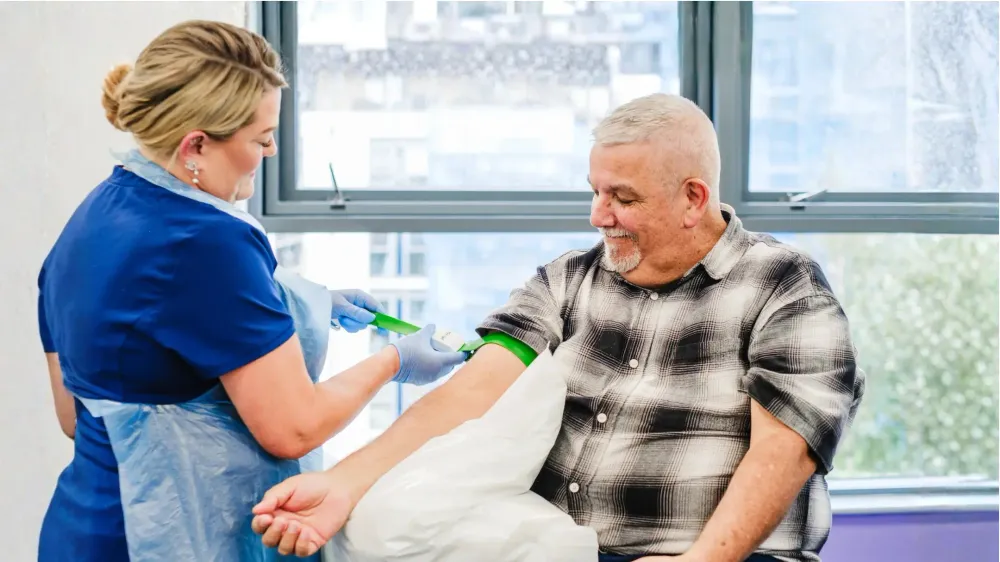
Our heart health tests are a quick, easy and accurate way to check that your heart is working as it should. They're included in our Health Assessments and can also be booked as individual tests.
Explore our health assessment packages and book your heart health check today.
Why is a healthy heart so important?
At the centre of your cardiovascular system, the heart keeps you alive, moving oxygen and nutrients around your body and helping clear away waste. A healthy heart is the foundation of good health overall.
It does this through circulation, pumping around five litres of blood through your body. The right side of the heart sends blood that needs oxygen to the lungs; that oxygen-rich blood returns to the left side, ready to travel out to every organ and tissue.
If the heart muscle is damaged or the valves stop working properly, the heart can struggle to meet your body's demand for oxygen-rich blood. That can show up as breathlessness or extreme tiredness, and can lead to more serious heart conditions.
What is heart disease?
Heart disease, also called coronary heart disease, happens when one or more of the coronary arteries supplying oxygen-rich blood to the heart become narrowed or blocked. This is usually caused by a build-up of fatty deposits (atheroma). When the arteries narrow, a process known as atherosclerosis, blood struggles to flow through them, which raises your risk of heart attack and stroke.
Some people have a higher risk than others. If you live with diabetes or high blood pressure, smoke, or are carrying extra weight, regular heart health checks are especially worthwhile, particularly if symptoms start to appear.
Signs of a healthy heart
Alongside a heart health check, a few everyday indicators can suggest your heart is doing its job well.
Energy levels
Everyday tiredness has many causes, but extreme fatigue can be a sign of heart failure. If you have enough energy to comfortably handle daily tasks, such as shopping, climbing stairs, or doing housework, that's a good sign your heart is pumping enough oxygen-rich blood to meet your body's needs.
Breathing
With a healthy heart, moderate-intensity exercise shouldn't leave you gasping for air. Being out of breath when you push yourself hard is normal; struggling to breathe during a moderate workout may need paying attention to.
Heart rate
For most adults, a normal resting heart rate sits between 60 and 100 beats per minute. You can check yours by feeling your pulse and counting the beats over one minute. A lower resting rate often points to an efficient, healthy heart, though stress and some medications can affect it, and what's normal varies from person to person and changes with age.
Blood pressure
A healthy adult usually has a blood pressure reading between 90/60 mmHg and 120/80 mmHg. A reading between 120/80 mmHg and 140/90 mmHg is high-normal (sometimes called pre-hypertension) and can be brought back into range with a few healthier lifestyle changes.
Oral health
Studies show a link between healthier gums and lower blood pressure, with people who have severe gum disease reported to be twice as likely to have high blood pressure. Good oral health can be one more sign your heart is in good shape.
What are the first signs of heart problems?
Heart disease doesn't always cause symptoms early on, which is part of what makes checks so valuable. As it progresses, though, it can lead to angina (chest pain) or, more seriously, a heart attack. Being aware of the early signs can be life-saving.
Early signs and symptoms of heart disease can include:
- Chest pain
- Palpitations
- Extreme fatigue
- Shortness of breath, even at rest
- Change in skin colour (greying or paleness)
- Nausea
- Feeling weak
- Dizziness
- Sweating
- Persistent coughing or wheezing
- Swelling of the legs and arms
- Signs of poor blood supply to the extremities (numbness or coldness)
When to call 999
The most common sign of a heart attack is chest pain; a feeling of pressure, heaviness, tightness or squeezing. It can spread to the arms, jaw, neck, back or stomach, and may come with lightheadedness, a cold sweat, shortness of breath, nausea, or an overwhelming sense of anxiety. If you think you or someone else is having a heart attack, call 999 straight away.
What tests check your heart health?
Several heart health checks can flag heart-related conditions, from recording your heart's rate and rhythm to assessing your circulation. These are the ones that give you the most useful picture.
Heart rhythm (ECG) test
An electrocardiogram (ECG) looks at your heart's rhythm, rate and electrical signalling to spot irregularities. It's non-invasive: small electrodes are placed on the chest, arms and legs, and the results are recorded on a graph that shows if your heart is beating too fast, too slow or irregularly.
Blood pressure test
Blood pressure is measured with a cuff around your arm that tightens briefly; it's a little snug, but not painful. A reading of 135/85 mmHg or higher (taken at home) or 140/90 mmHg or higher (taken by a healthcare professional) is considered high, or hypertensive. High blood pressure raises your risk of heart disease, heart attack and stroke.
Cholesterol test
A cholesterol blood test (also called a lipid panel) measures triglycerides, HDL and LDL cholesterol. LDL, often called "bad" cholesterol, can contribute to fatty build-ups in the arteries and raise your risk of heart attack, stroke and peripheral arterial disease (PAD).
Peripheral arterial disease (PAD) test
This non-invasive test checks the blood flow to your limbs to detect narrowing in the arteries; an early warning sign for wider cardiovascular risk. It's one of the heart checks included across our Health Assessment packages.
BMI
Body mass index estimates a healthy weight range based on your height and weight. A higher BMI is linked to a greater risk of heart failure. BMI isn't perfect as it doesn't account for ethnicity or muscle mass, so it's best read alongside other heart health checks rather than on its own.
Bluecrest offers ECG Tests and Heart Disease and Stroke Risk Tests that bring these checks together, giving you a fuller picture of how healthy your heart is.
How can you keep your heart healthy?
A few everyday habits go a long way towards protecting your heart. Alongside regular checks, these are among the most effective:
- Move regularly; exercise strengthens the heart muscle, improves circulation, lowers blood pressure and eases stress
- Quit smoking; it's one of the most impactful changes you can make for your heart
- Aim for and maintain a healthy weight
- Eat a heart-healthy diet rich in fruit, vegetables, whole grains and lean proteins
- Cut back on processed foods, saturated fat and salt, and choose unsaturated fats such as olive oil
- Add more fibre to your diet
- Keep alcohol within recommended limits
- Manage your stress levels
How to get your heart health checked
Heart health checks such as ECG Tests and Heart Disease and Stroke Risk Tests capture your heart rate, heartbeat and electrical signalling, along with your cholesterol, BMI and blood pressure, all of which help evaluate your risk of heart disease and other conditions.
Our full body private health checks are built for busy people who want to take control of their health. They're quick, accurate, convenient and completely stress-free. There's no waiting for an appointment, invasive procedures, awkward questions, long journeys or crowded waiting rooms.
Trained health assessment specialists carry out every check across 350+ venues in the UK and Ireland, so there's likely to be accurate, professional testing within 20 minutes of your home. You can also add any individual test to a full body health check, just call us before your appointment.
What's included in our Health Assessments?
Whichever package you choose, you'll get an overview of your health, including your risk of heart disease and stroke. The heart health checks included across all three packages are:
- Blood Pressure Test
- Heart Rhythm (ECG) Test
- Peripheral Arterial Disease (PAD) Test
- Cholesterol & Advanced Diabetes Test
Our Core Health Assessment adds a blood health profile that checks your haemoglobin levels, which can sometimes point to heart disease and other conditions.
Our Complete Health Assessment includes everything in Core, plus a specialist Lipoprotein (a) Test to assess your artery health and a private consultation to talk through your results with a healthcare professional.
Take control of your heart health
Checking how well your heart and other organs are working is a simple, proactive step. A full body health check can pick up issues or undiagnosed conditions early, or simply reassure you and set you on the right path. After your personalised Results Report, you can decide your next move, whether that's a lifestyle change, further testing or a conversation with your GP.
Whether you're worried or simply curious about how your body is working, book your heart health check today.
Frequently asked questions
How do I check my heart health at home?
You can check your resting heart rate by feeling your pulse and counting the beats over one minute (a normal range is about 60–100), and note how easily you breathe during moderate exercise. Home checks give useful clues but can't detect narrowed arteries or rhythm problems. A professional heart health check is the reliable way to know for sure.
What is the best test to check for heart problems?
There's no single "best" test; the right one depends on what's being checked. An ECG is excellent for heart rhythm, while cholesterol and blood pressure tests reveal cardiovascular risk. Combining several, as our Health Assessments do, gives the clearest overall picture. You can read more in our guide on the best test to check for heart problems.
How often should I get my heart checked?
For most healthy adults, an annual heart health check is a sensible rhythm. If you have risk factors such as high blood pressure, diabetes, a family history of heart disease, or you smoke, more frequent checks may be worthwhile. Your GP or one of our team can help you decide.
Can you have heart problems with no symptoms?
Yes. Many people with early heart disease have no obvious symptoms, which is exactly why regular checks matter. A heart health check can flag risks before you'd ever notice them, giving you the chance to act early.
Are Bluecrest heart health checks painful?
No. Our heart health checks are non-invasive and stress-free. An ECG involves placing small electrodes on the skin, and a blood pressure reading uses a cuff that tightens briefly; it's a little snug, but not painful.
Live healthier for longer with Bluecrest health intelligence
Need help? Call free on 0800 652 2183 to speak to one of our team.