What is an Underactive Thyroid?
The most common symptoms of an underactive thyroid are tiredness, unexplained weight gain, feeling the cold, brain fog and low mood. They tend to build slowly, which is why they're often mistaken for simply getting older. An underactive thyroid (hypothyroidism) happens when your thyroid gland doesn't release enough thyroid hormone, slowing down your metabolism.
Around 2 in every 100 people in the UK have an underactive thyroid, and it's more common in women. The good news: it's straightforward to check. Below you'll find a full symptoms checklist, what causes it, and how a simple thyroid function blood test measures your TSH and T4 to give you clear answers.
What are the symptoms of an underactive thyroid?
Symptoms usually develop gradually. Weight gain and fatigue are often the first signs, but as the condition progresses, you may notice several of the following. Use this as a quick checklist. The more of these symptoms you recognise, the more worthwhile it is to get your thyroid checked.
Underactive thyroid symptoms checklist
- Tiredness and fatigue
- Unintentional weight gain
- Increased sensitivity to cold
- Brain fog and memory problems
- Low mood or depression
- Constipation
- Dry skin and coarse hair
- Puffy face
- Hoarse voice
- Muscle weakness, aches and stiffness
- Thinning hair
- Irregular or heavier periods
- Raised cholesterol levels
- A slowed heart rate (bradycardia)
Experiencing several of these? It's a good idea to get your thyroid function checked to see whether an underactive thyroid could be the underlying cause. A thyroid function blood test is the clearest way to know.
What is an underactive thyroid (hypothyroidism)?
An underactive thyroid, or hypothyroidism, is when your thyroid gland doesn't make or release enough thyroid hormone into your bloodstream. This slows your metabolism, which is what leads to symptoms like weight gain and fatigue. Because it comes on gradually, many people put the early signs down to ageing, but left unchecked, it can lead to other health conditions over time.
What are the types of hypothyroidism?
There are four main types of underactive thyroid:
- Primary hypothyroidism: the most common type. It affects the thyroid gland directly, so it makes too little hormone. In response, your pituitary gland produces more thyroid-stimulating hormone (TSH) to compensate. Autoimmune conditions like Hashimoto's disease are a common cause, as is thyroid surgery or radiation therapy.
- Secondary hypothyroidism: much rarer. It happens when an underactive pituitary gland can't send enough TSH to signal the thyroid.
- Tertiary hypothyroidism: occurs when the hypothalamus doesn't make enough thyrotropin-releasing hormone (TRH), so the pituitary can't produce enough TSH.
- Subclinical hypothyroidism: also called mild thyroid failure. TSH is slightly raised but other thyroid hormone levels are still within range. It often resolves on its own within three months.
What causes an underactive thyroid?
An underactive thyroid can be caused by:
- Hashimoto's disease: an autoimmune disorder and one of the most common causes
- Certain medications, including lithium, thalidomide and amiodarone
- Conditions present at birth, such as being born without a thyroid gland
- Iodine deficiency
- Pituitary gland disorders, including non-cancerous tumours
- Thyroiditis: inflammation of the thyroid, which can follow a viral illness or pregnancy
Who is most at risk?
Anyone can develop an underactive thyroid, but you're more likely to if you're female, or if you have:
- An autoimmune disease
- A family history of thyroid conditions
- Had thyroid surgery
- Been through pregnancy
- A previous history of head or neck radiation therapy
- Recently started or stopped certain medications
An underactive thyroid can be lifelong, but it's very treatable. Levothyroxine is the most common medication used to replace the hormone your thyroid can't make, though levels need regular monitoring to keep your dosage right.
How is an underactive thyroid diagnosed?
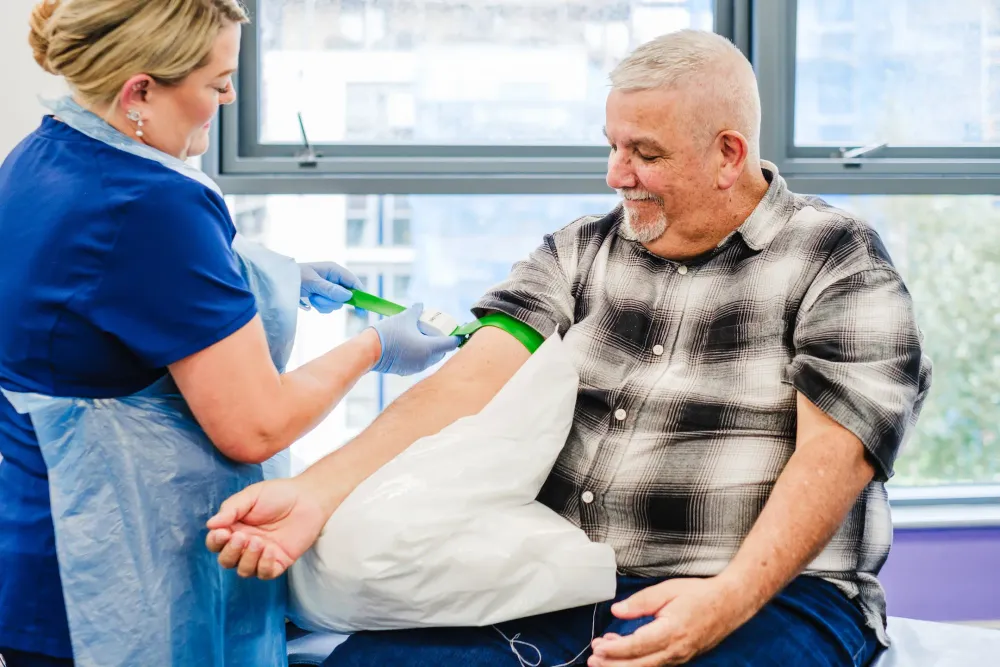
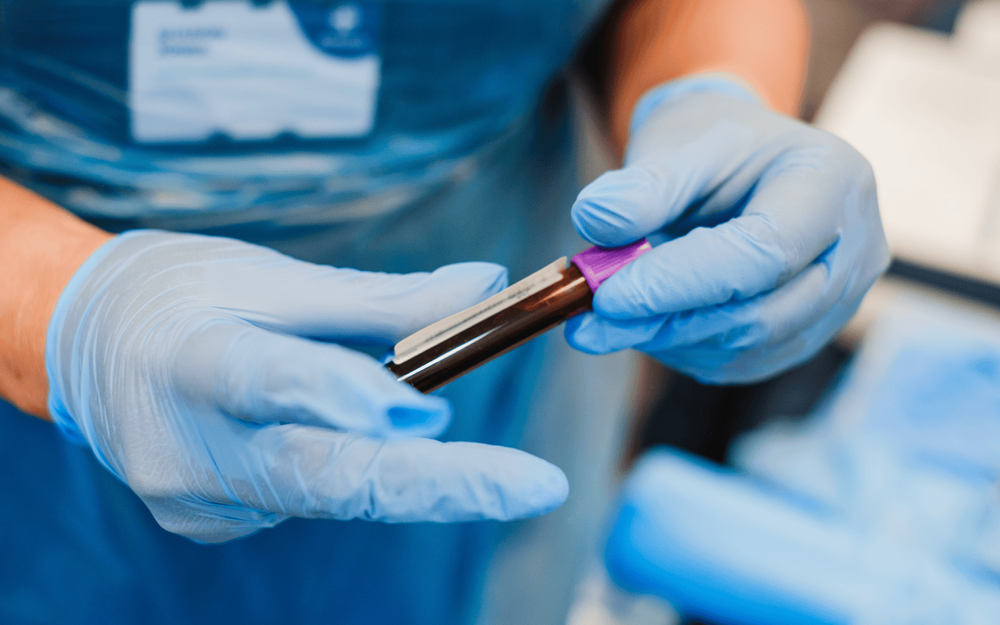
If you're asking "do I have an underactive thyroid?", a thyroid function blood test is the way to find out. The two tests most used to diagnose an underactive thyroid are a TSH blood test and a free T4 blood test. You can explore the full range in our guide to thyroid function blood tests.
TSH blood test
A TSH blood test measures thyroid-stimulating hormone in your blood. A high TSH level suggests your thyroid isn't making enough hormone, while a low TSH level suggests it's making too much. To understand the role TSH plays in your health, read our explainer: What is TSH?
Free T4 (FT4) blood test
Free T4 (FT4), also known as thyroxine, is the active thyroid hormone circulating in your blood. An FT4 test measures how much of it you have.
Reading the two together: a raised TSH with low FT4 points to primary hypothyroidism caused by the thyroid gland itself. A low TSH with low FT4 points to hypothyroidism caused by a problem with the pituitary gland.
What happens if my results are abnormal?
If your thyroid results are outside the normal range, you may be advised to have further tests, such as an ultrasound, CT scan or thyroid uptake scan, to help confirm the underlying cause.
Check your thyroid health with a private blood test
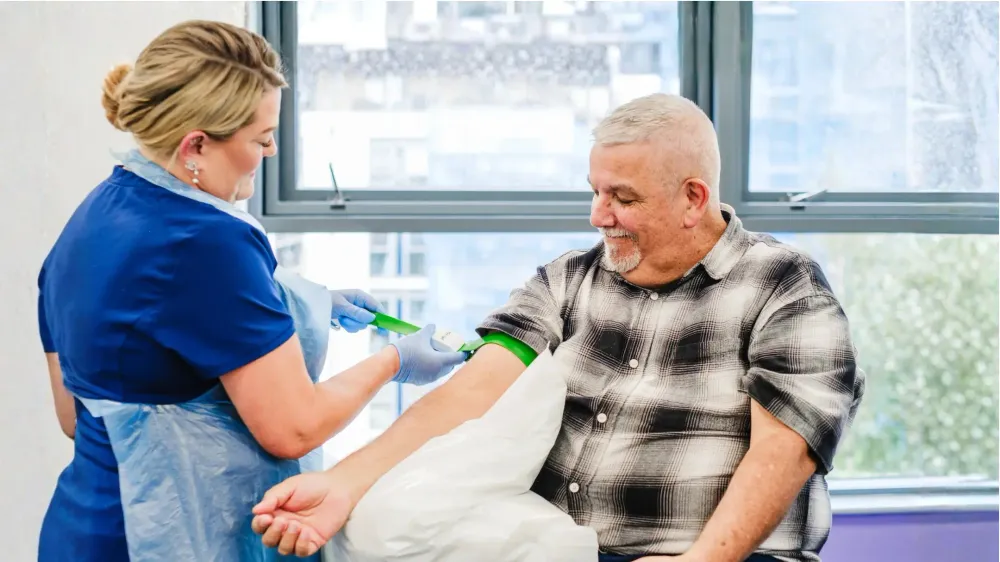
At Bluecrest Wellness, our private thyroid function test looks at how well your thyroid gland is working. This in-depth test gives you insight into both your TSH and FT4 levels and the imbalances that can point to thyroid disorders like an underactive thyroid.
You can book at locations across the UK at a time that suits you. Because we work with leading UK laboratories and are fully accredited for a wide range of private blood checks, you can be confident of fast, efficient and accurate results.
Book your private thyroid blood test.
Prefer to talk it through? Call our team free on 0800 652 2183.
Frequently asked questions
What is usually the first sign of an underactive thyroid?
Tiredness and unexplained weight gain are usually the earliest signs. Because they come on slowly and are easy to mistake for everyday tiredness or ageing, they can be overlooked. If they're paired with feeling the cold or brain fog, it's best to get your thyroid checked.
Can you test for an underactive thyroid at home or privately?
Yes. You don't need to wait for a GP referral. A private thyroid function blood test measures your TSH and FT4 levels to show how well your thyroid is working. Bluecrest offers thyroid blood checks at locations across the UK, with results interpreted by our experts.
Is an underactive thyroid more common in women?
Yes. Anyone can develop hypothyroidism, but it's more common in women, and your risk is higher if you have an autoimmune condition or a family history of thyroid problems.
Can an underactive thyroid be treated?
It can. An underactive thyroid is often a lifelong condition, but it's very manageable. Levothyroxine replaces the hormone your thyroid can't make, and regular blood tests help keep your dosage right.
What's the difference between a TSH and a T4 test?
A TSH test measures the hormone that signals your thyroid to work, while a free T4 test measures the active thyroid hormone in your blood. Read together, they show whether your thyroid is underactive and help point to the cause.