Health checks over 40: what should you have checked?
Turning 40 is a useful point to start paying closer attention to your health, but there is no single health check that everyone needs every year. The right checks and how often you have them depend on your age, family history, existing health, lifestyle and individual risk factors.
For adults aged 40–74, the NHS offers a free Health Check every five years to assess the risk of conditions including heart disease, stroke, type 2 diabetes and kidney disease. Private health checks can provide additional tests and more flexibility if you want to monitor a wider range of health markers more regularly.
A private full body health check, sometimes called a Health MOT or full body check-up, brings several tests together to give you a broader picture of your current health. At Bluecrest Wellness, these include checks covering areas such as heart health, blood pressure, cholesterol, blood sugar, kidney function, liver function and lung health, depending on the package you choose.
When should you start having regular health checks?
For many people, 40 is a sensible age to start thinking more proactively about regular health assessments. This is when the risk of several common health conditions begins to increase.
That doesn't mean you need to wait until 40 if you have concerns. Your GP may recommend earlier or more frequent checks if you have a family history of certain conditions, an existing health problem, take particular medicines or have other risk factors.
How often you should have a private health check is also not necessarily once a year. An annual check can be useful if you want to track changes over time, but your individual circumstances should guide the frequency.
A simple guide:
- Under 40: routine full body health assessments aren't necessarily needed for everyone. Targeted checks may be appropriate if you have symptoms, risk factors or a family history of disease.
- 40–49: this can be a useful time to establish baseline measurements for things such as blood pressure, cholesterol and blood sugar and monitor how they change over time.
- 50–59: continuing to monitor cardiovascular health, blood sugar and other key markers becomes increasingly useful as health risks change with age.
- 60 and over: regular monitoring can help you keep track of changes in key health markers and identify areas that may need further discussion with a healthcare professional. These are general guidelines rather than a substitute for individual medical advice. If you have an existing condition or particular concerns about your health, speak to a GP about which checks you need and how often.
What does a health check over 40 include?
The exact tests included in a health check vary depending on the provider and package. A full body health assessment is designed to look at several areas of your health rather than focusing on one particular symptom or condition.
A comprehensive private health check may include:
- Blood pressure: checks whether your blood pressure is within the expected range.
- Heart rhythm: an ECG records the electrical activity and rhythm of your heart.
- Cholesterol: measures blood fats that can contribute to cardiovascular risk.
- Blood sugar: an HbA1c test gives an indication of your average blood sugar levels over the previous two to three months.
- Kidney function: blood markers can provide information about how well your kidneys are working.
- Liver function: blood tests can provide information about liver health and function.
- Lung function: spirometry measures how effectively you can move air in and out of your lungs.
- Body composition: depending on the package, this can provide information about factors such as muscle mass and body fat.
- Iron and essential proteins: blood tests can provide information about iron stores and other important markers.
- Heart disease and stroke risk: results from several checks can be combined with other factors to estimate cardiovascular risk.
At Bluecrest, the tests included depend on the selected. The current range includes Active, Core and Complete Health MOTs, with the Complete package providing the most comprehensive set of tests alongside a private GP consultation.
Why are health checks particularly useful after 40?
The value of a health check isn't simply in identifying a problem. It can also give you a useful baseline against which to compare future results.
For example, one cholesterol result tells you where things stand at that particular point. Comparing results over several years can show whether a marker is relatively stable or changing.
Regular checks can therefore help you:
- Monitor important health markers over time
- Identify potential risk factors
- Understand changes in your health
- Have more informed conversations with your GP
- Make lifestyle changes where appropriate
- Investigate results that may need further attention
- Keep track of progress from one assessment to the next A health check is not a guarantee that you are healthy and it cannot detect every condition. It is one way of building a clearer picture of your health alongside routine NHS screening, GP appointments and appropriate medical care.
What health checks should women consider after 40?
There isn't one standard set of tests that every woman needs after 40. General health checks can look at areas such as blood pressure, cholesterol, blood sugar, heart health, kidney function and liver function.
Age-appropriate NHS screening should also continue alongside any private health assessment. Depending on your age and circumstances, this can include breast, cervical and bowel cancer screening.
Bluecrest also offers Female Cancer Risk packages for people aged 40–79, with testing designed around specific cancer risks. These are separate from a general Health MOT and should not be considered a replacement for NHS screening.
If you're experiencing changes associated with hormones or menopause, more targeted testing may also be appropriate depending on your circumstances.
What health checks should men consider after 40?
For men, a general health assessment can provide information about cardiovascular health, blood pressure, cholesterol, blood sugar, kidney and liver function and other markers.
Cancer screening should also be considered according to age and individual risk. Bluecrest offers Male Cancer Risk packages for people aged 40–79, including tests relating to prostate, bowel and stomach cancer risk.
A PSA test, for example, can provide information about prostate cancer risk, but it is not suitable as a blanket screening test for every man. If you're considering prostate testing, particularly if you have a family history or symptoms, discuss this with your GP.
NHS or private health check: what's the difference?
The NHS and private health checks serve different purposes.
The NHS Health Check is a free preventive check for eligible adults aged 40–74 and is offered every five years. It focuses on assessing your risk of conditions including heart disease, stroke, type 2 diabetes and kidney disease.
A private full body health check can provide a broader selection of tests and greater flexibility around when and where you have them. You can also choose from different packages depending on how comprehensive you want your assessment to be.
Having a private health assessment doesn't mean you should skip NHS screening or GP appointments. The two can complement one another.
What happens during a private full body health check?
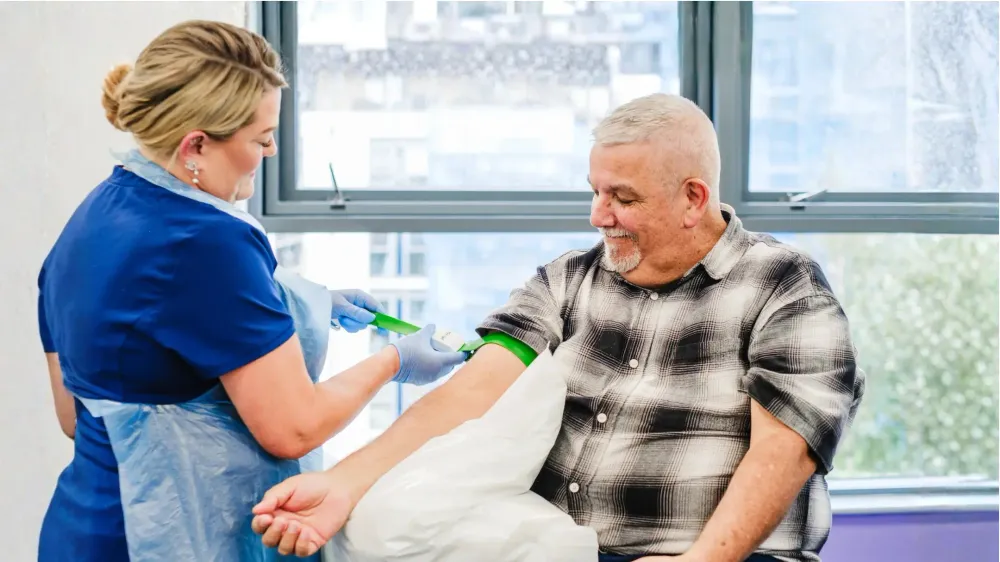
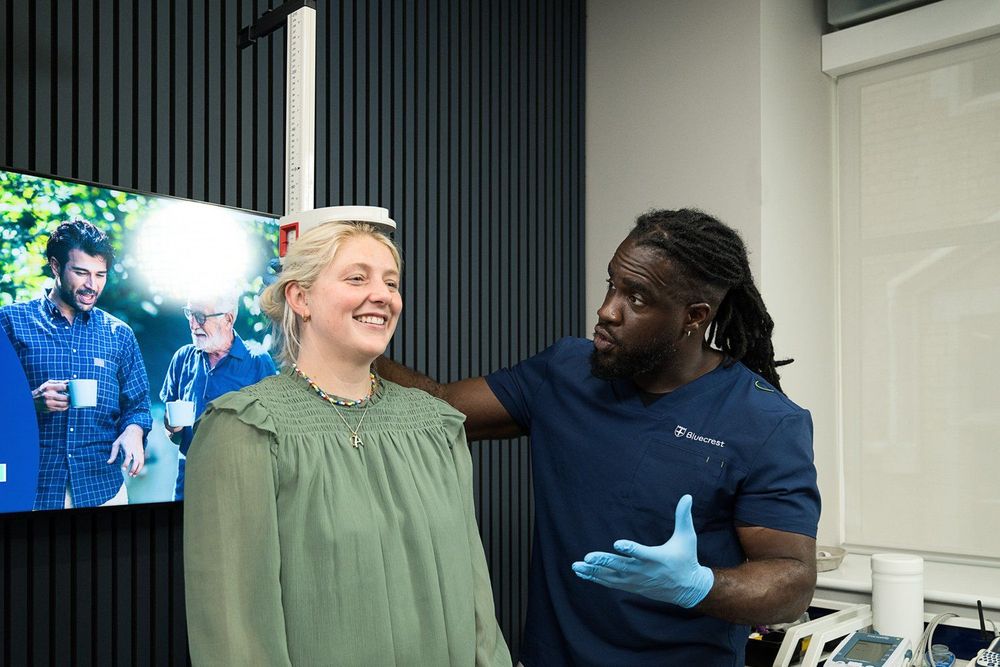
A Bluecrest Health Assessment is designed to be straightforward. You choose your package, venue and appointment time, then attend an appointment where trained healthcare professionals carry out the relevant checks.
The assessment itself takes around 20–30 minutes, depending on the package. Your results are then compiled into a personalised Results Report, which you can access digitally.
Some Bluecrest packages also include a private GP consultation, while all current Health MOT packages include access to a 24/7 GP Helpline for a year.
How often should you have a private health check?
There isn't a universal answer.
An annual health check can be useful if you want to monitor your results regularly and compare them year on year. However, some people may benefit from more targeted testing, while others may not need a comprehensive private assessment every year.
Your age, family history, lifestyle, existing conditions and previous results can all affect how often you may want to monitor particular health markers.
The important thing is not to treat a private health check as a replacement for medical care. If you have symptoms or an existing health concern, speak to your GP rather than waiting for your next routine assessment.
What should you do with your health check results?
The most useful health check is one that gives you information you can understand and act on.
At Bluecrest, results are presented in a personalised Results Report, with green, amber and red flags to make it easier to see which results may need attention. Depending on the package, you may also have access to a private GP consultation or the 24/7 GP Helpline.
If a result is outside the expected range, it doesn't necessarily mean you have a particular health condition. Results need to be considered in context and, where appropriate, discussed with your GP or another healthcare professional.
Frequently asked questions
Is 40 a good age to start having health checks?
For many people, 40 is a useful point to start thinking about regular health assessments because the risk of several common health conditions increases with age. However, younger adults with particular risk factors may also benefit from earlier or more targeted checks.
Do I need a health check every year after 40?
Not necessarily. The right frequency depends on your age, health, family history and risk factors. An annual private health assessment can help some people track changes over time, while others may need targeted testing or less frequent comprehensive assessments.
What is the difference between a full body health check and a Health MOT?
The terms are often used to describe a similar type of assessment. At Bluecrest, a full body Health Assessment is also referred to as a Health MOT and combines multiple tests to provide a broader picture of your health.
Can I have a private health check if I feel healthy?
Yes. Health assessments can provide a baseline and help you monitor changes even when you feel well. They are not designed to replace GP care or NHS screening, but can provide additional information about areas such as blood pressure, cholesterol, blood sugar and organ function.
Are private health checks a replacement for the NHS Health Check?
No. A private health assessment should not be viewed as a replacement for NHS screening, GP appointments or medical advice. The NHS Health Check is a separate preventive service offered to eligible adults aged 40–74 every five years.
A health check can give you a clearer picture after 40
Your 40s can be a useful time to start paying closer attention to how your health changes over time. You don't necessarily need every test every year, but having the right checks at the right time can help you understand your health and identify areas worth discussing with a healthcare professional.
Bluecrest offers a range of private full body health checks and Health MOTs, from the Active package through to the more comprehensive Complete Health MOT. Assessments are available across the UK and Ireland, with results provided in a personalised report.