The Cost of High Cortisol in the Workplace
Cortisol plays an essential role in how your employees respond to stress. But when levels remain elevated over an extended period, it can have a significant impact on both the employee and the organisation.
High cortisol levels are manageable, but they become increasingly harmful when ignored – and few people understand what is happening biologically when they feel stressed.
This article looks at the impact unchecked cortisol can have on your workforce, and what you can do to prevent it.
What is cortisol?
Cortisol, often called “the stress hormone”, is one of the body’s most important chemical messengers. Produced by the adrenal glands, it helps regulate energy levels, sleep-wake cycles, blood pressure, immune response, metabolism, and the body’s fight-or-flight response.
Short-term cortisol spikes can be a good thing, helping to boost energy and focus, but chronic stress keeps these levels elevated. It’s at this point that the short-term benefits turn into long-term problems.
Understanding the drivers of high cortisol in the workforce
Work can be a significant driver of stress. In the UK, over half of employees say the demands of their job lead to excessive stress.
In the workplace, key drivers of elevated cortisol levels include:
- Workload
- Time pressure
- Lack of control or autonomy
- Poor work-life boundaries
- Job insecurity or organisational change
- Toxic culture or poor management
How high cortisol presents itself in your workforce
Symptoms of high cortisol are often vague enough to be dismissed: feeling tired but wired, struggling to sleep, brain fog, low motivation, increased anxiety, weight changes, irritability, low mood, and feeling overwhelmed for no obvious reason.
These symptoms can appear slowly but steadily across your workforce. You may hear more accounts of employees struggling with poor sleep, or even with decision-making.
Over time, these issues can lead to rising rates of absenteeism, presenteeism, or disengagement.
The business impact
You've seen how this affects individuals, but what does it mean for your business?
Reduced productivity and performance
Elevated cortisol contributes to brain fog, poor sleep, and feeling overwhelmed – all of which impair concentration, decision-making, and problem-solving.
Over time this leads to missed deadlines and reduced work quality, reinforcing a cycle of pressure and elevated stress. One study found more than 1 in 4 UK workers have missed deadlines due to stress.
Increased sickness absence
Unmanaged stress can lead to burnout and time away from work.
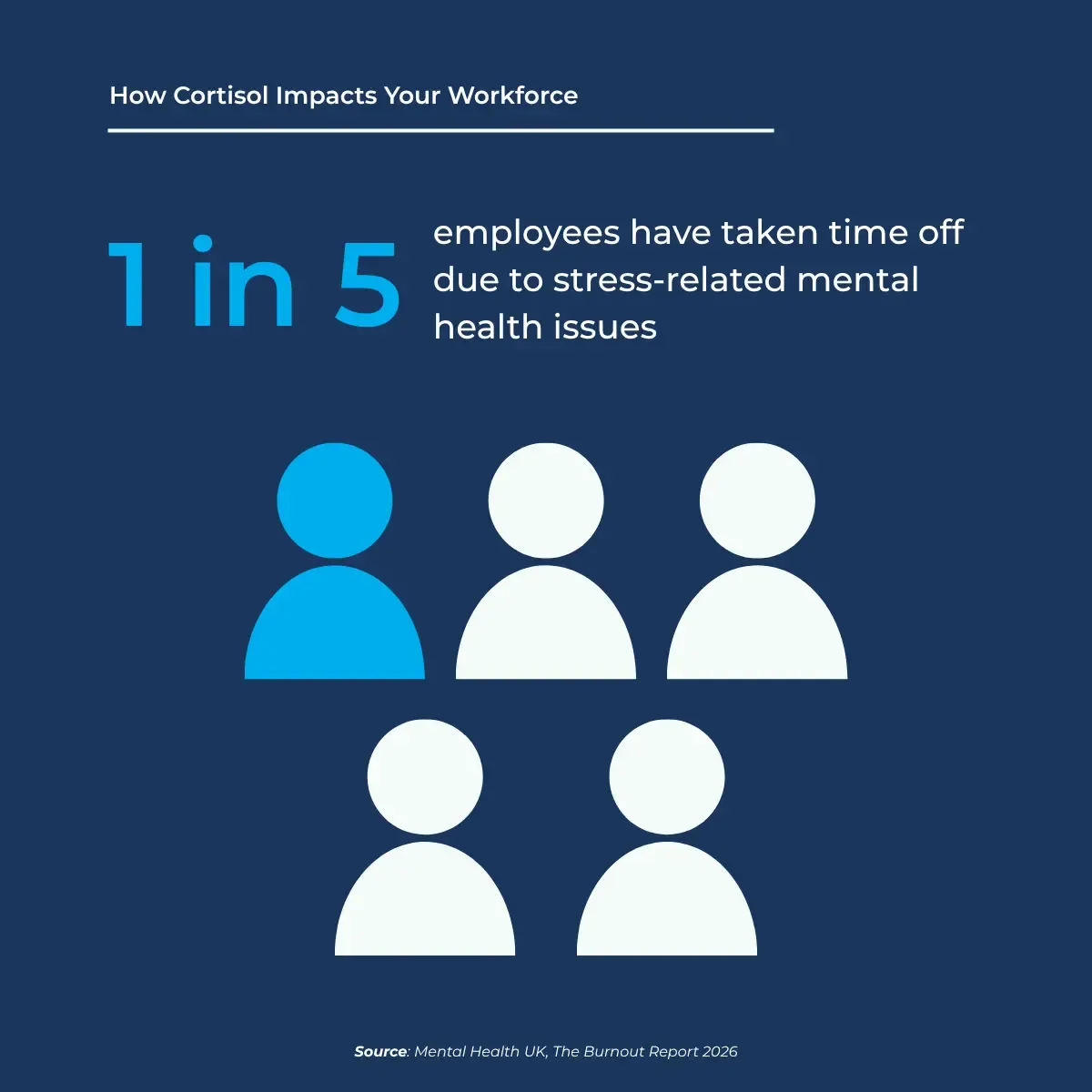
More than 22 million working days are lost each year to work-related stress, depression, or anxiety – the equivalent of more than 60% of all working days lost to work-related ill health. And 1 in 5 employees have taken time off for stress-related mental health issues.
For employers, this means operational disruption, added pressure on remaining staff, and rising sick pay and cover costs.
Higher turnover and disengagement
Sustained stress erodes engagement. With only around 10% of UK employees fully engaged at work, disengagement is already a widespread problem that costs the economy an estimated £257 billion annually in lost productivity, plus long-term hiring and retention costs for employers.
Increased healthcare or benefits costs
UK employers already spend around £10 billion a year on sick pay, with additional costs from private healthcare and benefits. Factor in absence, reduced productivity, and healthcare expenditure and poor workforce health is estimated to cost employers around £85 billion annually.
The role of health assessments and early intervention
Early intervention pays off. Supporting employees before stress becomes chronic improves wellbeing and reduces long-term costs. Whether through an Employee Assistance Programme (EAP) or benefits like Bluecrest health assessments, structured support builds trust, improves engagement, and creates a more resilient workforce.
How to support your workforce
Encourage recovery, not just productivity
Promoting recovery time is key to cortisol regulation. Encourage employees to take proper lunch breaks and use their holiday allowance, and actively discourage an 'always-on' culture. Help employees set boundaries, and make sure the organisation respects them.
Lead by example
Employees take cues from leadership more than policy. Encourage leaders to model healthy behaviours: taking breaks, logging off on time, and using annual leave. Avoid rewarding overworking or presenteeism as the norm, and promote realistic workloads. Giving managers training to recognise stress signals can also help employees feel seen and supported.
Improve role clarity and communication
Lack of clarity is a major – and often overlooked – stress driver, making it key that employees understand their role, expectations, and priorities. Normalise open conversations about capacity, and about renegotiating deadlines when needed.
Regular check-ins
Regular 1:1s that go beyond performance to cover capacity and wellbeing help managers spot issues early. Use these conversations to support employees in deprioritising tasks where needed, rather than continuously adding to their workload.
Reduce unnecessary meetings and interruptions
Constant interruptions increase cognitive load and stress. Encourage focus time and purposeful meetings with clear agendas. Some organisations have introduced 'meeting-free Fridays' to give employees uninterrupted time to work through their tasks.
Mike Boyle, Head of HR at Bluecrest said “Everyday stress is a normal part of working life, but it’s how organisations respond to it that really matters.
Employees perform at their best when they feel supported, not overwhelmed. By recognising the signs and impact of stress and putting the right support in place, organisations can create a culture where people can thrive, not just cope.
At Bluecrest, we take a proactive approach, through regular check-ins on workload and wellbeing, providing access to an Employee Assistance Programme, and an annual health assessment for all team members. It’s about creating consistent, meaningful support that helps people stay well, not just respond when issues arise.”
Turning insights into action
Managing stress is a shared responsibility, and it’s not something employees should navigate alone. Organisations that take this seriously, by embedding practical strategies, fostering open conversations, and genuinely supporting wellbeing, will build healthier and more productive teams.
The businesses that will thrive are those that stop waiting for stress to become a crisis before acting. Early recognition, proactive support, and a culture that values sustainable performance over short-term output aren’t just good for people, they’re good for business.

Tiegan Hill
Corporate Content Marketing Executive
Graham Jones
Medical Writer