Fatty Liver Disease (NAFLD): Causes, Symptoms and Testing
Fatty liver disease is one of the most common liver conditions in the UK, yet it rarely causes symptoms in its early stages, and so many people have it without knowing.
It's estimated to affect around one in three UK adults, and our own testing data points the same way: around 1 in 5 people we test show an elevated liver marker (21.3%).
However, caught early, fatty liver is often reversible. A simple blood test is often the first step to finding out where your liver health stands.
What is fatty liver disease?
Fatty liver disease is a build-up of excess fat in the cells of your liver. A healthy liver contains little or no fat, and a small amount isn't a problem. Once fat makes up more than about 5% of the liver's weight, it's classed as a fatty liver.
The condition tends to develop in stages. It usually begins as simple fatty liver (steatosis), where fat has built up but there's no real inflammation. In some people, this progresses to steatohepatitis, where the liver becomes inflamed. Over time that can lead to fibrosis (scarring) and, at its most advanced, cirrhosis, where the scarring is severe and permanent. Many people never move beyond the first stage, but because the early stages are silent, it's easy to miss.
Why is NAFLD now called MASLD?
You may see fatty liver disease referred to by a newer name. NAFLD (non-alcoholic fatty liver disease) has been renamed MASLD, which stands for metabolic dysfunction-associated steatotic liver disease. The more advanced, inflamed form once called NASH is now known as MASH.
The change was made to better reflect the role of metabolic health in the condition. Both sets of terms are still in use across the NHS and in clinics. Throughout this article we've used NAFLD, as it remains the more familiar term.
Fatty liver symptoms
In the early stages, there usually aren't any fatty liver symptoms. The liver can carry excess fat for years without giving off obvious signals, which is why the condition is so often picked up by chance during a routine blood test.
Where early symptoms do appear, they tend to be vague and easy to attribute to something else. They can include:
- Persistent tiredness or fatigue that doesn't improve with rest
- A dull ache or discomfort in the upper right side of the tummy, roughly under the lower right ribs
- A general feeling of being unwell or run down
Symptoms of more advanced liver disease
In more advanced cases, where the condition has progressed to significant scarring, symptoms may become more noticeable. These can include yellowing of the skin or the whites of the eyes (jaundice), itchy skin, and swelling in the tummy or ankles. These are signs of later-stage liver disease rather than early fatty liver, and they warrant prompt medical attention.
If you're regularly tired, notice discomfort under your right ribs, or have risk factors for liver disease, speak to a GP or arrange a liver check.
What causes fatty liver disease?
Fatty liver disease is closely tied to metabolic health. It often develops alongside a cluster of related conditions known as metabolic syndrome. The main contributing factors are:
- being overweight, particularly carrying weight around the middle
- type 2 diabetes and insulin resistance
- raised cholesterol
- high blood pressure
Our testing data shows among people with an elevated liver marker: 70% also had a raised BMI flag, and 58.6% also had a cholesterol flag.
It's also a myth that the condition only affects people who are overweight or who drink heavily. Fatty liver disease can develop in people of a healthy weight, and this type is not caused by alcohol. That's why a proper check is so useful.
Who's most at risk?
As well as the factors above, age plays a part too, and there's some evidence that fatty liver can run in families. There's also a notable difference between men and women in our data: men are 1.5 times more likely than women to show unhealthy liver flags (14% vs 9.4%).
Knowing you're in a higher-risk group is a good reason to check your liver health rather than wait for symptoms that may never come.
How is fatty liver disease tested and diagnosed?
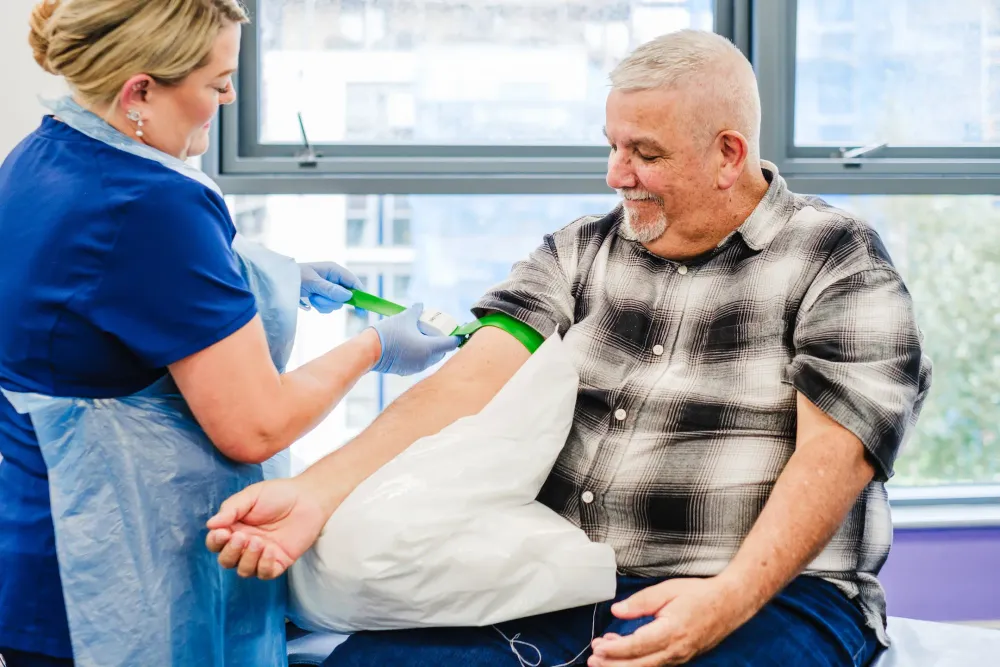
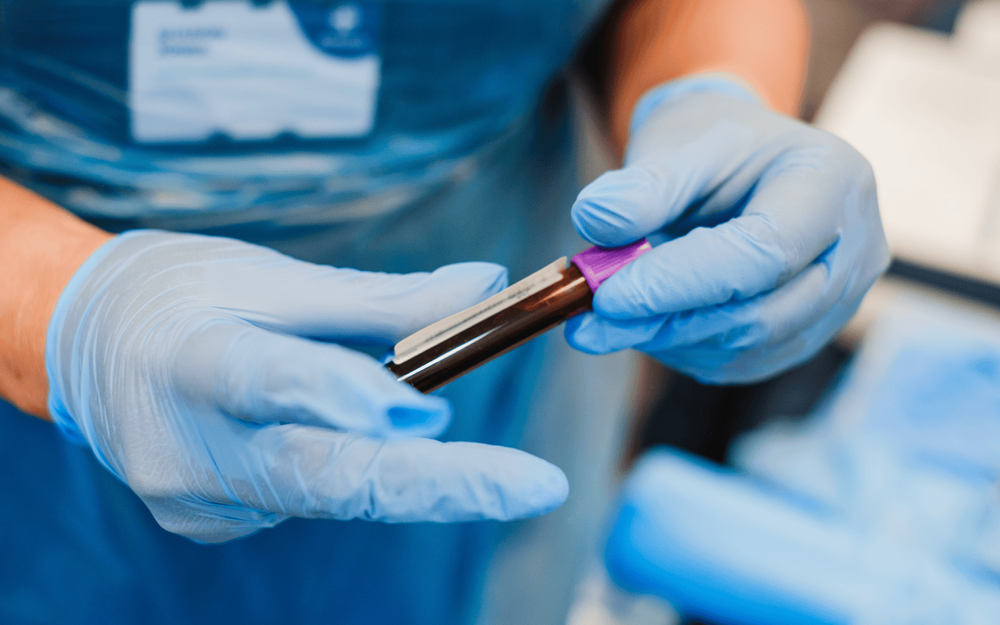
The usual starting point is a liver function test (LFT), a blood test that measures a group of enzymes and proteins linked to liver health. These include ALT (alanine aminotransferase), AST (aspartate aminotransferase), Gamma GT, ALP (alkaline phosphatase) and bilirubin. Raised levels of certain enzymes can point to inflammation or fat in the liver.
Liver function results can come back normal even when fatty liver is present. So an LFT is a useful first step, not a complete picture. It tells you whether your liver markers are in range and flags whether a closer look is worthwhile.
Where results or risk factors suggest a closer look is needed, the next steps are usually an ultrasound scan, a FibroScan, or a fibrosis assessment such as the FIB-4 score or an Enhanced Liver Fibrosis (ELF) test. A liver fibrosis test helps assess whether any scarring has begun, which is key information for understanding how far the condition may have progressed.
Over 400,000 people have had their liver function tested by Bluecrest.
Can fatty liver disease be reversed?
In its early stages, fatty liver disease is often reversible. Because the liver is good at repairing itself, reducing the fat stored in it can improve or even clear the condition. The changes that make the biggest difference are:
- reaching and keeping a healthy weight
- moving more
- eating well
- keeping alcohol within recommended limits
- managing related conditions, such as type 2 diabetes and high cholesterol
The earlier the condition is identified, the more room there is to turn things around.
Checking your liver health with Bluecrest
Liver function is included as standard across our health checks, alongside checks for cholesterol, diabetes risk, kidney function and more, so you get a rounded view of your health in one appointment.
If you'd like to look more closely at your liver specifically, a liver fibrosis test can be added. Your results come with clear, colour-coded explanations and access to a 24/7 GP helpline, so you're never left to interpret them alone.
Frequently asked questions
Is fatty liver disease serious?
Early-stage fatty liver often causes no harm and can be reversed. It becomes more serious if it progresses to inflammation and scarring, which over many years can lead to cirrhosis. Identifying it early is the best way to keep it from advancing.
Can you have fatty liver without drinking alcohol?
Yes. Non-alcoholic fatty liver disease is not caused by alcohol; it's linked to metabolic factors such as weight, cholesterol and type 2 diabetes. It can also affect people who are a healthy weight.
What does fatty liver pain feel like?
When it's present at all, it's typically a dull ache or feeling of fullness in the upper right side of the tummy, under the lower ribs, rather than a sharp pain. Many people feel nothing at all.
Can fatty liver be reversed?
In its early stages, often yes. Losing excess weight, being more active, eating well and reducing alcohol can lower the amount of fat in the liver and improve the condition.
Dr Martin Thornton
Chief Medical Officer, BluecrestAnna Jones
Chief Nursing Officer, Bluecrest