Which Health Check Should You Get? A Decision Guide
Around 1 in 3 completed Bluecrest blood profiles return at least one amber or red flag (35.5%). These are people who, for the most part, felt perfectly fine on the morning of their appointment.
So, which health check is right for you? It depends on three things: your age, what you are trying to find out, and how much detail you want. This guide walks you through all three, so that by the end you will know exactly what to book.
The short version
If you are 40 to 74, live in England and have none of the conditions listed below, start with your free NHS Health Check. If you fall outside that, because of your age, where you live, or an existing diagnosis, or you want more than a cardiovascular risk score, a private health assessment covers the gap.
The rest of this guide explains how to choose between them, and there is a table near the end matching common situations to specific checks.
Start here: what are you trying to find out?
Almost everyone checking their health falls into one of three groups. Yours determines what you should book.
- You want a baseline. You feel well and you would like a clear picture of where you stand, so you have something to measure against in future.
- You have a specific concern. Perhaps heart disease or diabetes runs in the family, or something has been playing on your mind.
- You are tracking a number. Your cholesterol or blood sugar has been flagged before, and you want to know whether it is moving in the right direction.
Each of those needs a different answer.
The free option: what the NHS Health Check covers
If you live in England, are aged 40 to 74 and do not already have one of a set of pre-existing conditions, you are entitled to a free NHS Health Check every five years.
That exclusion list covers:
- heart disease
- chronic kidney disease
- diabetes
- high blood pressure
- atrial fibrillation (an irregular heartbeat)
- transient ischaemic attack (a mini-stroke)
- inherited high cholesterol
- heart failure
- peripheral arterial disease (narrowed arteries, usually in the legs)
- stroke
You are also outside the programme if you are already taking medicines such as statins to lower your cholesterol, or if a previous check found you had a 20% or higher risk of cardiovascular disease over the next ten years. If any of those apply, you should be offered regular check-ups through your existing care instead.
You will usually be invited by your GP surgery or your local council, and in some areas you can now complete part of it online. If you think you are due and nothing has arrived, contact your GP practice. If they do not offer the check, your local council can tell you where to book.
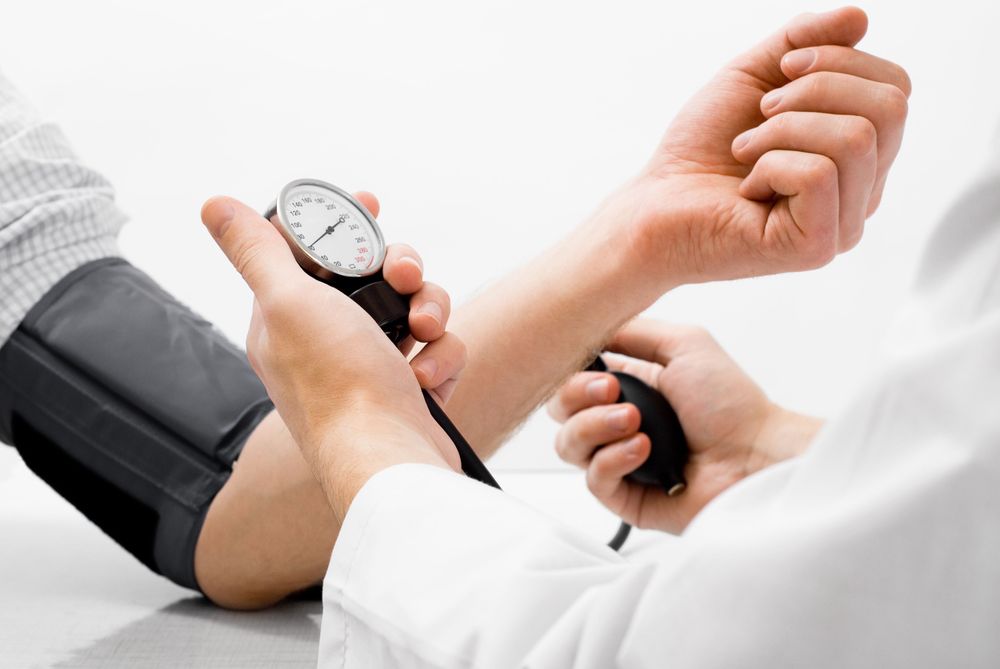
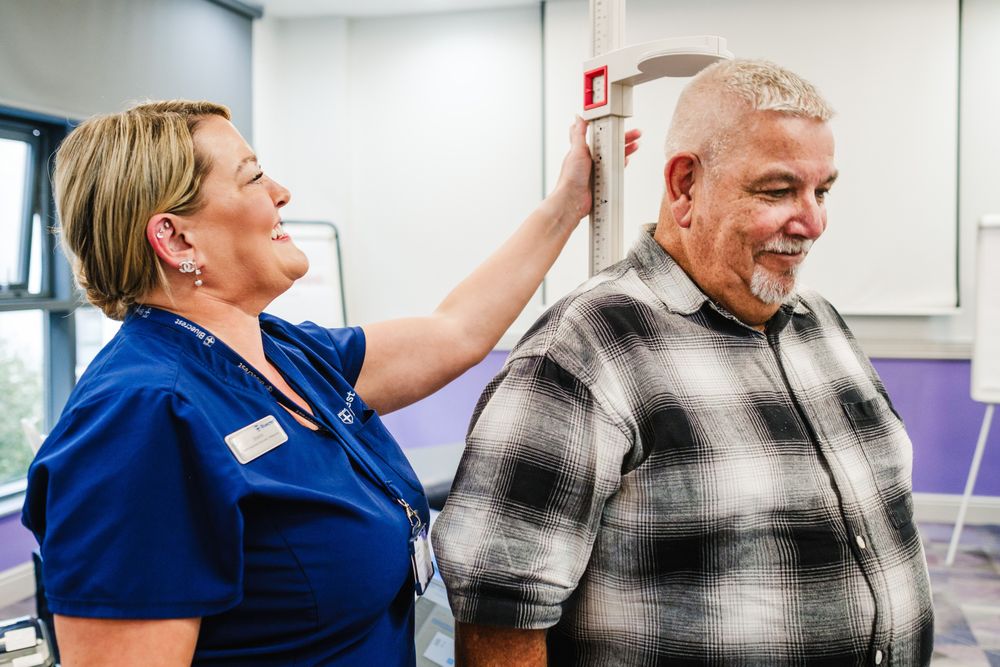
The appointment takes 20 to 30 minutes. It covers your height and weight, your waist measurement, blood pressure and cholesterol, and possibly a blood sugar test. You will be asked about family history, smoking, alcohol and physical activity, and you will be given a cardiovascular risk score for the next ten years.
The NHS Health Check does not screen for dementia. If you are over 65, you will be told which symptoms to look out for, and given details of local services.
The check is designed to spot cardiovascular risk, not to give you a full view of what is happening inside your body. It does not typically include liver function, kidney function, a full blood count, thyroid function, iron or ferritin.
And if you are under 40 or over 74, there is no routine check.
If you live in Scotland, Wales or Northern Ireland, the NHS Health Check as described here does not apply to you. Each UK nation sets its own screening and prevention policy, so check what your local health service offers before assuming you are covered.
When a private health assessment makes sense
A private health assessment is worth considering in four situations:
- You are under 40 and not eligible for anything on the NHS.
- You are eligible, but you want more than cardiovascular markers.
- You have a family history that makes you want to look more closely.
- You want your results explained properly, rather than left to interpret alone.
Knowing your numbers changes what you do with them. 84% of surveyed customers reported that they would focus on a positive health aim after seeing their results, and 37.6% of customers who initially were flagged red or amber improved their metabolic age when returning to Bluecrest.
Choosing by what is going on in your life
Age and circumstance change what is worth looking at.
In your 20s and 30s
It is easy to assume this is the decade you can skip, but the data suggests otherwise. Males aged 18–24 are the group most likely to show a liver flag (28.7%). Mental health matters here too, with young men aged 18–34 being the most anxious age group. A baseline assessment now gives you something to compare against for the next 30 years.
In your 40s and 50s
This is when cardiovascular risk starts to build quietly. Nearly 1 in 2 men have high or borderline-high blood pressure (50.61%), and over half of men have elevated or borderline cholesterol (57.62%). Yet neither has symptoms you would notice. If you are eligible for an NHS Health Check, take it. If you want the wider picture, look for an assessment that also covers liver, kidney and thyroid function.
For women at any age
Some markers are particularly important to consider in women. Iron deficiency is around seven times more common in women than men (4.7% vs 0.6%), and it is a common cause of the tiredness people often put down to a busy life. Make sure iron and ferritin are on the list.
If diabetes risk is on your mind
1 in 8 men are pre-diabetic or diabetic, and many don't know it (12.27%). Blood sugar is one of the most useful early-warning markers there is, because the window for turning it around is a wide one.
At-home kit or in-person assessment?
Home finger-prick kits can be suitable for monitoring a small number of specific markers, but they are not designed to provide the breadth of information available from a comprehensive health assessment. If you're looking for a more complete picture of your health, a wider range of tests is often more informative.
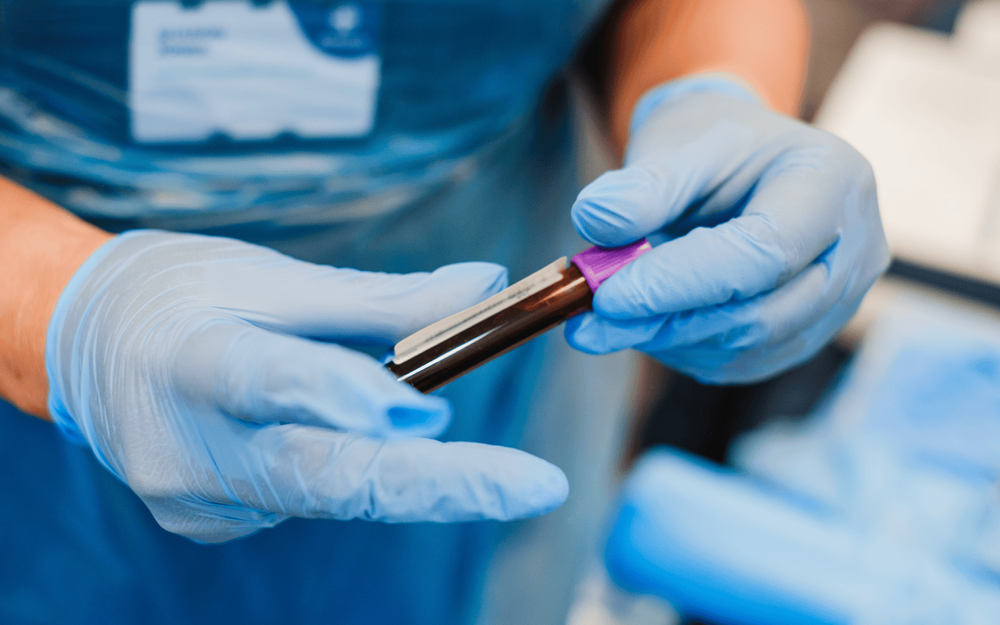
They also cannot measure aspects of your health that require an in-person assessment. Blood pressure, body composition and other physical measurements need to be taken directly by a healthcare professional or trained practitioner. In addition, finger-prick samples provide a smaller volume of blood than a venous draw, which limits the number and range of tests that can be performed reliably.
Whichever route you take, the quality marker to look for is not the price or the length of the test list. It is the laboratory. Results should be processed by a UKAS-accredited lab working to ISO 15189, the same standard NHS laboratories meet. Bluecrest meets these requirements.
What should you pay, and how often?
Private health assessments in the UK vary in price. Clinic-based assessments generally start from around £179, with more detailed options adding deeper blood analysis and a GP consultation to talk your results through.
How often you check is a decision to make with a clinician who knows your history. If you have had a marker flagged, or you are actively working to shift a number, more frequent checks give you something to measure against. If everything came back clear and nothing has changed in your health or your family history, there is rarely a case for testing constantly.
Responsibility for acting on a test result sits with the clinician who ordered it. In practice, most GPs will look at private results you bring them, but they are not obliged to act on them, and you will get more out of that conversation by bringing one focused question rather than a full report.
Results are only useful if you act on them
Look for results presented with green, amber and red flags so you can see at a glance what needs attention. A single reading also tells you less than three readings across three years, so the ability to track changes matters. And look for someone to ask, whether it's a GP helpline or a consultation with a GP who can talk you through it.
The quick answer
| If this sounds like you… | This is the health check to consider |
|---|---|
| You're 40–74 in England with no pre-existing conditions | Your free NHS Health Check. Your GP surgery or local council should invite you. |
| You're under 40 and want a baseline | An entry-level private health assessment covering blood pressure, cholesterol, liver, kidney and blood sugar. |
| You have a family history that worries you | A mid-range assessment with deeper blood analysis, so the relevant markers are actually covered. |
| You want someone to talk you through it | A comprehensive assessment that includes a private GP consultation. |
| You are tracking a marker that was flagged | The same assessment you had last time, repeated annually so the comparison is like for like. |
Frequently asked questions
Which health check is best for me?
The one that answers your specific question. If you are 40 to 74 and want a cardiovascular risk check, the free NHS Health Check covers it. If you are younger, or you want markers beyond cholesterol and blood pressure, a private health assessment will help you know where you stand.
Can I have a private health check without a GP referral?
Yes. Most private health assessments are self-referral, so you can book directly online and often find an appointment within a week or two.
Will my GP accept private test results?
Most will look at them, particularly when the sample has been processed by a UKAS-accredited laboratory. They are not obliged to act on them, and borderline results may need confirming on the NHS before any major decision is made.
How often should I have a health check?
It depends on your history. If you have had a marker flagged or you are working to improve a particular number, regular checks let you see whether it is moving. If your results were clear and nothing has changed, there is rarely a case for frequent testing. Discuss with a clinician who knows your background.
What is the difference between a health check and a health assessment?
In everyday use they mean much the same thing. A health assessment usually implies a broader set of tests plus interpretation and advice, rather than a single measurement taken in isolation.
Ready to find out where you stand?
Bluecrest offers health assessments at more than 400 locations across the UK, with results available in days and a 24/7 GP helpline included for a full year. An in-depth health assessment can provide a broader understanding of your health, helping you make informed decisions with greater confidence.
Dr Martin Thornton
Chief Medical Officer, BluecrestAnna Jones
Chief Nursing Officer, Bluecrest