What is an Inflammatory Profile Blood Test?
An Inflammatory Profile is a private blood test from Bluecrest Wellness that measures key markers of inflammation. These include high-sensitivity C-reactive protein (hsCRP) and ferritin, alongside a grip strength check.
Together, these give you a clearer picture of your body's inflammatory status, general health and long-term wellbeing. The test takes 20–30 minutes, is non-invasive, and is added on to a full Bluecrest health check.
Inflammatory Profile
A blood test measuring hsCRP and ferritin, plus a grip strength check, used to assess your body's inflammatory status and potential for longevity.
High-sensitivity C-reactive protein (hsCRP)
A precise blood test that detects even low, chronic levels of inflammation, often before symptoms appear. hsCRP is also used to help assess cardiovascular (heart and stroke) risk.
Ferritin
The main storage form of iron in the body. Low levels may point to iron deficiency; high levels can signal inflammation.
Grip strength
A functional measure taken with a handheld device. It is strongly linked with overall health, independence in later life and longevity; weaker grip strength is associated with inflammation, frailty, reduced muscle mass and a higher risk of falls.
C-reactive protein (CRP)
A protein produced by the liver in response to inflammation. Low levels are normal; levels rise with infection, injury or other inflammatory conditions.
Booking note: The Inflammatory Profile can only be booked by phone. Call free on 0800 652 2183, and our team will help you choose a package and a time and place that suits you.
Key facts at a glance
| Markers measured | hsCRP, ferritin, and grip strength (Standard); plus an Advanced Omega 3 & 6 Panel (Advanced) |
| Appointment length | 20–30 minutes |
| Sample type | A quick, non-invasive blood test plus a grip strength check |
| Results turnaround | Uploaded to My Wellness, often within three days |
| Fasting required | No. Eat and drink normally, but stay well hydrated |
| How to book | By phone only, on 0800 652 2183 |
| Availability | Add-on to any full Bluecrest health check, at 350+ venues across the UK and Ireland |
| Included support | Colour-coded (red/amber/green) Results Report and free 24/7 GP helpline with all packages |
What the Inflammatory Profile measures
Each marker below is a distinct entity with its own meaning.
High sensitivity C-reactive protein (hsCRP)
What it is: a precise blood test that detects even low levels of chronic inflammation, often before symptoms appear.
Why it matters: hsCRP helps assess your inflammatory status and is used to help gauge cardiovascular (heart and stroke) risk. Raised levels may indicate inflammation linked to infections, autoimmune conditions or cardiovascular disease.
How it differs from a standard CRP test: a standard CRP test measures higher levels of protein and points to general causes of inflammation, from autoimmune disorders to infections. An hsCRP test measures low levels and is specifically used to help assess heart disease and stroke risk.
Ferritin
What it is: the main storage form of iron in the body.
Why it matters: low ferritin may suggest iron deficiency; high ferritin can act as a marker of inflammation.
Grip strength
What it is: a functional measurement taken with a handheld device.
Why it matters: grip strength is strongly linked with overall health, independence in later life and longevity. Weaker grip strength is associated with inflammation, frailty, reduced muscle mass and an increased risk of falls.
Advanced Omega 3 & 6 Panel (Advanced Inflammatory Profile only)
The Advanced Inflammatory Profile adds an Omega 3 & 6 panel on top of hsCRP, ferritin and grip strength, assessing the inflammatory potential of your fatty acid profile:
- Omega-3 Index (% Omega-3): higher levels are associated with reduced cardiovascular risk and better brain health.
- Omega-6:3 Ratio: a lower ratio indicates a healthier balance between pro- and anti-inflammatory fats.
- ARA/EPA Ratio: a lower ratio suggests a more anti-inflammatory state within the body.
Why upgrade? Chronic inflammation can quietly contribute to age-related conditions. The Advanced profile adds a nutritional dimension, helping you understand how dietary fat balance and lifestyle may be influencing inflammation, heart health, brain health and long-term wellbeing.
How does hsCRP relate to heart and stroke risk?
Higher levels of CRP on an hsCRP test can indicate a higher risk of developing cardiovascular disease. The link is atherosclerosis: the narrowing of your arteries as LDL cholesterol builds up. Because atherosclerosis involves inflammation of the blood vessels, people with it tend to have higher CRP levels.
Your result should always be read alongside your wider cardiovascular risk. There are three broad risk groups:
- Low risk: lower cholesterol and few other risk factors (such as diabetes, high blood pressure or smoking) and no family history of early heart attacks. Even a higher-than-expected hsCRP result is unlikely to lead to intervention.
- Intermediate risk: a family history of heart disease or one or more added risk factors. Here, an hsCRP result can provide useful insight.
- High risk: people already receiving medical management and lifestyle advice, where an hsCRP test may not be necessary.
What a high hsCRP result means
A high result does not mean you have a heart problem, but it can indicate a raised risk of cardiovascular disease. You may be advised to make lifestyle changes, such as a heart-healthy diet, or, in some cases, to start medication to lower your risk.
CRP levels tend to rise gradually with age but stay fairly stable over months or years, so this is not a test that needs repeating often. Recent illness or injury, smoking and being overweight can all raise CRP, which is why we recommend not testing while unwell.
Who should consider an Inflammatory Profile?
Blood tests for inflammation may be useful if you:
- Have a family history of heart disease or stroke
- Experience persistent fatigue or low energy
- Suffer from unexplained aches, pains or joint issues
- Find it difficult to recover after illness or exercise
- Have frequent colds or infections
- Experience brain fog or difficulty concentrating
- Struggle with weight management
Who the Advanced Inflammatory Profile suits
- Those focused on longevity and healthy ageing
- People with a family history of cardiovascular or inflammatory conditions
- Anyone wanting a more in-depth picture of their inflammatory health
How it works: three simple steps
1. Call to book your test
This test can only be booked by phone. Call us on 0800 652 2183 and our friendly team will help you choose your package and arrange a time and location that suits you. With over 2,000 appointments available across the UK each week, you'll find a convenient slot.
2. Attend your appointment
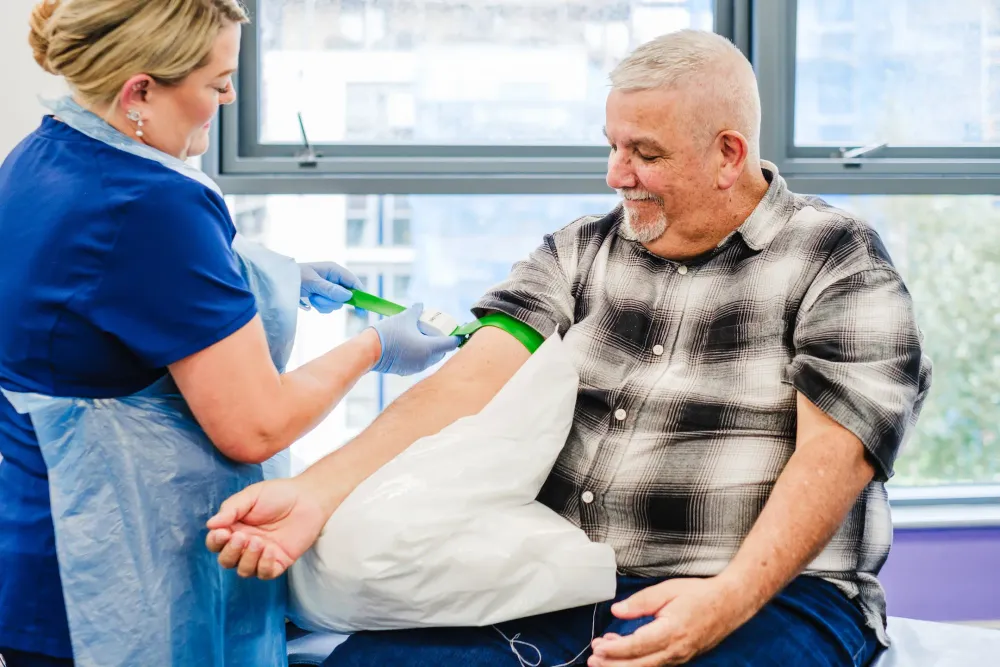
A Bluecrest health check specialist carries out your quick, non-invasive blood test and grip strength check. The appointment usually takes 20–30 minutes.
3. Receive fast results
Your results are uploaded to My Wellness, our secure online dashboard and app. You'll get an email as soon as they're ready, often within three days. Each result is colour-coded red, amber or green so you can see any areas for attention at a glance, with clear guidance on what to do next.
Why choose Bluecrest?
- Fast, accurate results: backed by established links with leading UK laboratories.
- Convenient appointments: typically within 20 minutes of your home, at 350+ venues across the UK and Ireland.
- Detailed, personalised Results Report: every reading explained in plain, easy-to-understand language.
- Free 24/7 GP helpline: included with all full health check packages, for a year.
Before you book: important guidance
- The grip test cannot be carried out if you have had an arm amputation or missing digits.
- Customers with bone or joint conditions (for example arthritis or carpal tunnel) may find the grip strength test uncomfortable and can choose to skip this part; all other elements can still be carried out.
- We recommend avoiding the test if you are currently unwell or still recovering from an illness.
- Wait at least 72 hours after a COVID-19 or flu vaccination before testing, as this can temporarily affect inflammatory markers.
Add the Inflammatory Profile to your full health check
The Inflammatory Profile can be added to any of our full-body private health checks. Choose your package and call 0800 652 2183 to add it on. Our full-body checks are:
- Quick and stress-free
- Available at 350+ high-quality venues across the UK and Ireland
- Carried out by trained Bluecrest health assessment specialists
- Designed for busy people who want convenient, reliable results without long waits or crowded clinics
Ready to take a proactive approach to your health? A full body health check gives you in-depth insights into your general wellbeing, from general health checks to specialist cancer risk tests and vitamin and mineral levels.
Live healthier for longer with Bluecrest health intelligence.
Frequently asked questions
What is an Inflammatory Profile blood test?
It's a private blood test that measures markers of inflammation, hsCRP and ferritin, alongside a grip strength check. Together they help assess your body's inflammatory status, general health and potential for longevity. It's added on to a full Bluecrest health check.
What is the difference between hsCRP and a standard CRP test?
A standard CRP test measures higher protein levels and points to general causes of inflammation, such as infections or autoimmune disorders. An hsCRP test measures low levels of CRP and is specifically used to help assess your risk of heart disease and stroke.
Do I need to fast for an Inflammatory Profile?
No fasting is required. You can eat and drink normally before your assessment, though staying well hydrated is important.
Does inflammation always show up in blood tests?
Not always. Some inflammation is localised or intermittent, so it may not appear in your results. Even so, markers like hsCRP and ferritin provide valuable clues about ongoing issues, and the grip strength check adds a functional measure.
How should I prepare for the test?
You'll receive full instructions when you book. Let us know about any medications or supplements you're taking, but don't stop them unless directed by your GP. Avoid testing while unwell, and wait at least 72 hours after a COVID-19 or flu vaccination.
Can the Inflammatory Profile be booked on its own?
It's available as an add-on to a full health assessment package, giving you a more in-depth view of your health. It can only be booked by phone on 0800 652 2183.
Can I take this test at home?
Appointments are carried out at trusted venues nationwide, typically within 20 minutes of your home.
Dr Martin Thornton
Chief Medical Officer, BluecrestAnna Jones
Chief Nursing Officer, Bluecrest